GHNP Trekking Guide — Great Himalayan National Park from Tirthan Valley
The Great Himalayan National Park (GHNP) was added to the UNESCO World Heritage list in 2014. The park covers about 1,171 sq km at elevations from 1,500 to 6,000 metres and records more than 375 animal species, including around 181 bird species. Snow leopard, Himalayan brown bear, blue sheep and Himalayan tahr live in the high country, typically 35–45 km of trekking into the park. Gushaini, 10 minutes from Tiraya, is the roadhead for the park's Tirthan Valley side.
Permits and Guides
You need no permit to visit Gushaini, the surrounding villages or the walk to the park gate at Rolla. Treks into the park's core zone need a permit from the GHNP office at Sai Ropa, about 5 km before Gushaini, and should be done with a registered local guide. Fees change, so confirm them at the office or ask us to check before you go.
Treks from the Tirthan Side
Gushaini to the GHNP Gate and Rolla (day hike or overnight)
The most popular walk: roughly 8–9 km each way along the Tirthan River, through Ropa village and dense forest, to the park gate and the Rolla campsite. Mostly gentle. A good first taste of the park.
Shilt Hut (3,100 m, 3–4 days)
Continues beyond Rolla up through forest to the Shilt meadow. This stretch is one of the park's best for birdwatching and a known habitat of the Western Tragopan, Himachal Pradesh's state bird.
Rangthar Top (2–3 days, from Pekhri)
Starts at Pekhri village, about 9–10 km from Gushaini, and climbs to an open meadow in the park's eco-zone with views of the higher ranges.
Tirath: the Source of the Tirthan (6–9 days)
For experienced trekkers only. The route goes deep into the park to the glacial source of the river below Hanskund Peak. Needs a permit, guide, porters and full camping support.
Best Season
April to June and September to November. Avoid the monsoon (July–August), when trails and roads are at their worst. Autumn is the best time for wildlife, as animals move to lower elevations. Higher trails are snowbound in winter.
What to Carry
Broken-in trekking shoes, warm layers, rain shell, water purification, personal medicines, snacks, binoculars and cash.
Staying Near the Trailhead
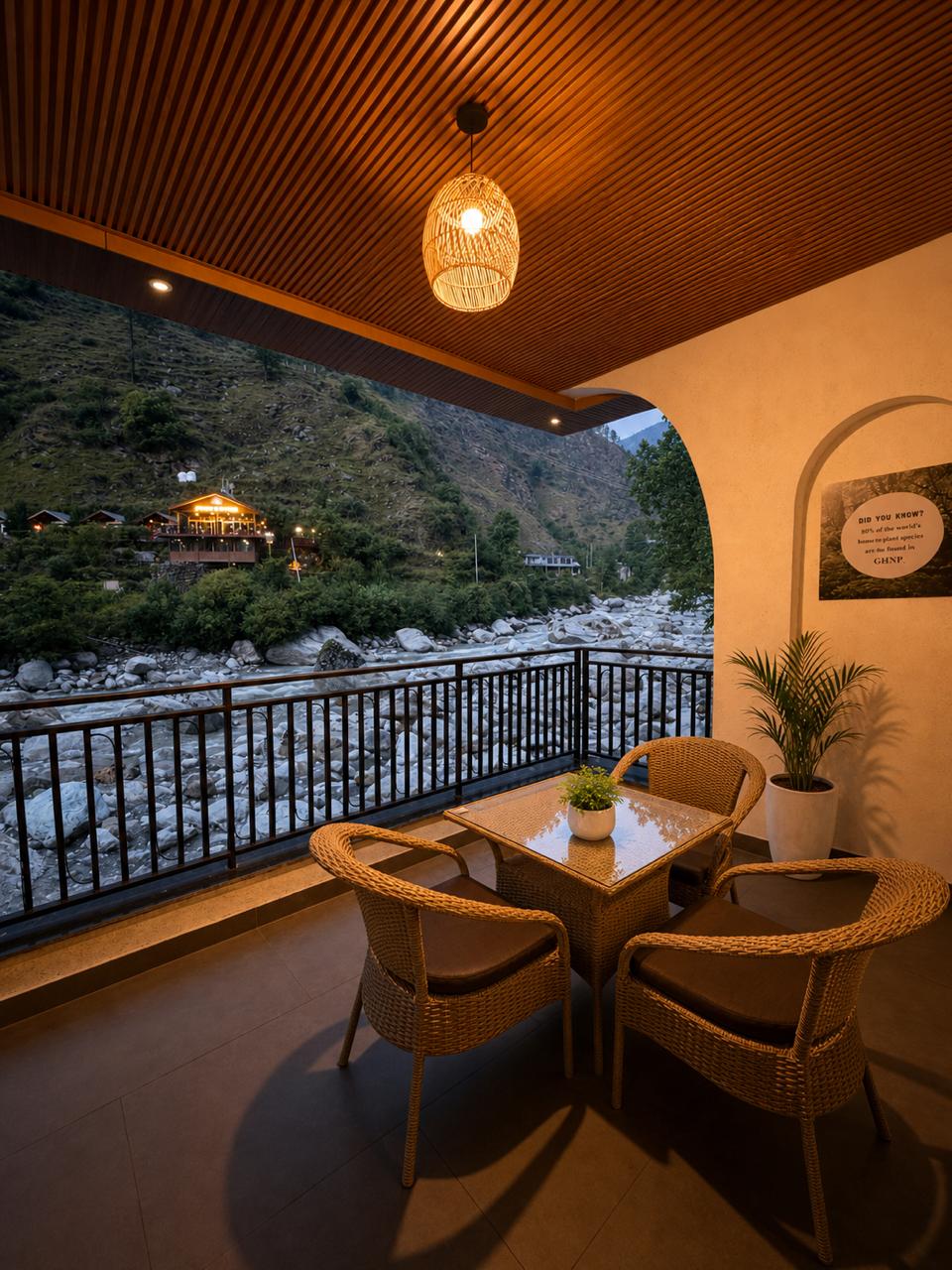
Tiraya is in Nagladi Village, 10 minutes from Gushaini. Start early from your river-facing room, come back to a hot shower and dinner at the Terrace Café. Our team can help arrange a local guide.
Base your GHNP trip at Tiraya. Check availability or talk to our team on WhatsApp · +91 78071 20050